
Making Time for Your Wellbeing Is a Skill
In a world that rewards busyness, slowing down can feel like a luxury. But the truth is simpler and far more empowering: making time for your wellbeing isn’t a personality trait or a stroke of luck. It’s a skill that can be learned, strengthened, and woven into the fabric of everyday life.
Why Wellbeing Requires Skill, Not Willpower
Most people assume that caring for themselves should come naturally. Yet the opposite is true. Modern life is designed to pull your attention outward, towards responsibilities, notifications, deadlines, and the needs of others. Without intentional practice, your own wellbeing becomes the first thing sacrificed.

Developing the skill of prioritizing yourself means learning to:
- Recognize your limits before you hit burnout
- Set boundaries without guilt
- Create micro-moments of restoration throughout your day
- Choose habits that nourish you even when life feels full
These aren’t instincts. They’re learned behaviours — and like any skill, they improve with repetition.
The Myth of “When Life Slows Down”
Many people wait for the “right time” to focus on their wellbeing. But life rarely slows down on its own. Instead, you learn to create space within the chaos.
Think of wellbeing like strength training. You don’t wait until you’re strong to go to the gym, you go to the gym to become strong. Similarly, you don’t wait until life is calm to care for yourself. You practice caring for yourself, so you can navigate life more calmly.
What Practicing the Skill Looks Like
You don’t need any dramatic lifestyle changes. You need small, repeatable actions that build internal muscle.
Here are some examples of practical wellbeing skills:
- Five-minute resets – a walk, a stretch, a breathing pause
- Saying “not right now” to protect your energy
- Scheduling your rest the same way you schedule your work
- Choosing nourishing inputs – food, conversations, media
- Checking in with your body instead of overriding it
These actions seem small, but they compound. Over time, they shift your identity from someone who tries to take care of themselves to someone who does.
The Emotional Side of the Skill
For many people, the real challenge isn’t time – it’s permission.

You may have been conditioned to believe that productivity is more valuable than rest, or that caring for others is more important than caring for yourself. Learning the skill of wellbeing means rewriting those internal rules.
It means practicing:
- Self-compassion instead of self-criticism
- Worthiness instead of guilt
- Presence instead of constant striving
This emotional work is just as important as the practical habits.
The Payoff: A Life That Feels More Like Yours
When you treat wellbeing as a skill, everything changes. You stop waiting for the perfect moment. You stop believing you’re failing when you struggle. You start seeing every day as a chance to practice.
And with practice comes transformation – not overnight, but steadily, quietly, powerfully.
You become more grounded. More resilient. More connected to yourself. And life begins to feel less like something happening to you and more like something you’re actively shaping.
About Hansa Pankhania and her team.
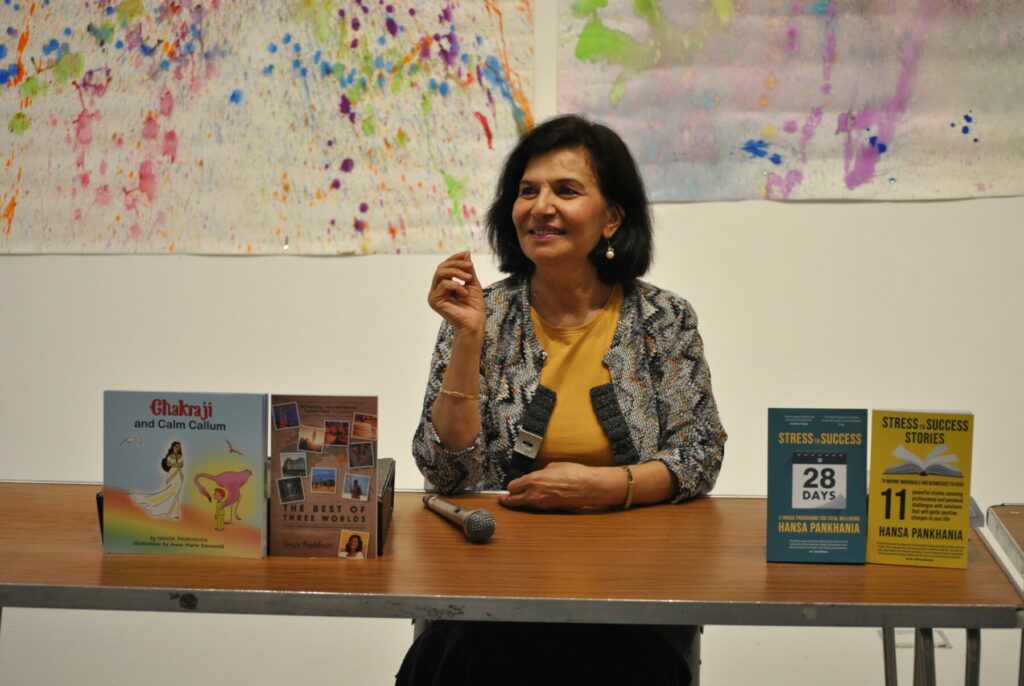
Our mission is to offer solutions for Stress Management, Sustainability and Success by sharing natural, holistic ways of enhancing body, mind and planetary wellbeing.
Please reach out if we can support you further or if you have any questions or comments.
Together we can mobilise positive changes in people’s lives to help make this world a better place for everyone.
The work that we do, whether it is working 1-2-1 with you, training a corporate group or writing books and blogs, is geared towards making a difference and helping people to enjoy joyous, meaningful, happy lives.
Get your copies of the 10 self-help books by Hansa Pankhania at https://hansapankhania.com/book-shop/
Support for Wellbeing Services for Businesses can be found at www.aumconsultancy.co.uk
Text- +44(0)7888747438